

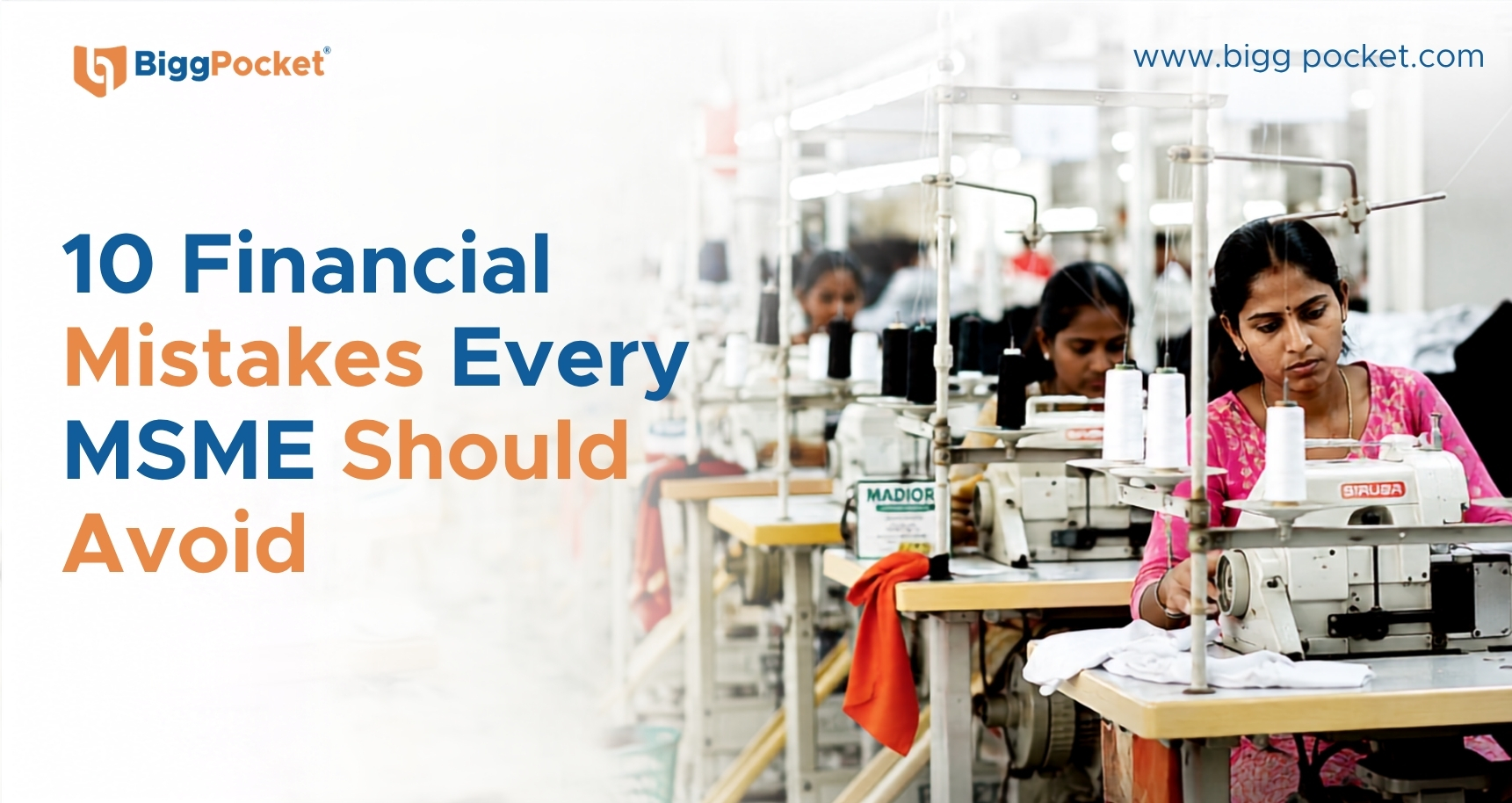
10 Financial Mistakes Every MSME Should Avoid
Smarter Financial Decisions Today Can Build a Stronger Business Tomorrow
Running an MSME is about much more than delivering great products or services. Every business decision—from managing cash flow to choosing the right funding—has a direct impact on long-term growth.
Many businesses don’t struggle because of a lack of opportunities. They struggle because of avoidable financial mistakes that gradually weaken profitability, restrict growth, and create unnecessary financial stress.
Whether you’re an entrepreneur planning to expand or a growing business managing day-to-day operations, avoiding these common mistakes can help build a stronger financial foundation.
1. Mixing Business and Personal Finances
One of the most common mistakes among small businesses is using the same account for personal and business expenses.
Without clear separation, it becomes difficult to track profitability, manage taxes, monitor cash flow, and maintain accurate financial records.
Best Practice: Maintain dedicated business accounts and separate expense tracking from day one.
2. Ignoring Cash Flow While Focusing Only on Revenue
Many businesses celebrate increasing sales but overlook whether cash is actually coming into the business.
A healthy order book doesn’t always mean healthy finances. Delayed customer payments can create liquidity issues, making it difficult to pay salaries, suppliers, and loan EMIs.
Remember:
Revenue shows business performance.
Cash flow keeps the business running.
Regularly reviewing cash inflows and outflows helps prevent financial stress.
3. Taking the Wrong Type of Loan
Every business loan serves a different purpose.
Using a short-term working capital loan to purchase machinery or finance expansion often leads to repayment pressure long before the investment starts generating returns.
Similarly, using long-term loans for short-term operational needs may unnecessarily increase borrowing costs.
The right funding solution should always match the purpose of the investment.
4. Borrowing More Than the Business Can Afford
Easy access to funding can sometimes encourage businesses to borrow more than they actually require.
Higher loan amounts mean higher EMIs, increased interest costs, and additional financial pressure.
Before borrowing, evaluate:
- Actual business requirement
- Repayment capacity
- Expected return on investment
- Future cash flow
Borrow what the business needs—not what it qualifies for.
5. Expanding Without Financial Planning
Growth is exciting, but expansion without preparation can strain operations.
Opening a new office, purchasing equipment, increasing inventory, or hiring additional employees all require careful financial planning.
Businesses should evaluate whether current cash flow, repayment capacity, and working capital are strong enough to support expansion before making major investments. Growth should strengthen a business—not disrupt it.
6. Neglecting Financial Records
Accurate bookkeeping isn’t just important for compliance.
Well-maintained financial records help businesses:
- Understand profitability
- Prepare for funding
- Improve financial planning
- Build credibility with lenders
- Make better business decisions
Poor documentation often delays loan approvals and limits financing opportunities.
Strong records create stronger businesses.
7. Not Maintaining a Financial Safety Buffer
Unexpected situations are part of every business.
Delayed payments, seasonal demand fluctuations, rising expenses, or economic uncertainty can affect operations.
Businesses that operate without emergency reserves often face unnecessary borrowing during difficult periods.
Maintaining a financial cushion provides flexibility and protects business continuity.
8. Delaying Financial Decisions
Many entrepreneurs postpone important financial decisions until problems become urgent.
Whether it’s restructuring debt, improving cash flow, or arranging funding, acting early provides more options and better financial outcomes.
Proactive planning is always more effective than reactive borrowing.
9. Choosing a Loan Based Only on Interest Rates
A lower interest rate doesn’t always mean a better loan.
Businesses should also consider:
- Loan tenure
- Processing timelines
- Flexibility of repayments
- Prepayment terms
- Overall financing structure
The best loan is one that supports the business comfortably throughout its repayment journey.
10. Managing Finances Without Professional Guidance
Business owners understand their operations better than anyone.
However, financial decisions often benefit from expert advice.
Working with experienced financial advisors and Chartered Accountants helps businesses:
- Choose suitable funding solutions
- Improve financial planning
- Prepare for expansion
- Optimize cash flow
- Reduce financial risks
The right guidance can save businesses both time and money while creating a stronger path for growth.
11. Diverting Funds from Their Intended Purpose
Funds sanctioned for a specific business purpose should be used accordingly. Diverting borrowed funds toward unrelated expenses, personal needs, or investments can create cash-flow mismatches and repayment pressure.
For example, using working capital limits for non-business expenses can leave the business short of funds when it needs to pay suppliers, manage inventory, or meet operational commitments.
Use borrowed funds strictly for their intended purpose and maintain clear tracking of how business financing is utilised.
12. Missing Cash Discounts by Not Using Short-Term Funds Strategically
Businesses sometimes avoid using short-term funding even when it could help them take advantage of supplier cash discounts.
For example, if a supplier offers a meaningful discount for immediate or early payment, a business may be able to use an appropriate short-term borrowing facility to make the payment upfront, secure the discount, and repay the borrowing through its normal operating cash flows.
However, this strategy only makes sense when the benefit from the cash discount exceeds the cost of borrowing and the repayment cycle is clearly understood.
Evaluate supplier discounts alongside short-term borrowing costs. When the numbers work in favour of the business, strategically using short-term funds can improve procurement economics and working capital efficiency.
Building Financially Stronger Businesses
Every successful MSME shares one common trait—it treats financial management as a strategic priority rather than an administrative task.
Good financial decisions don’t just help businesses survive; they help them scale confidently, seize new opportunities, and remain resilient during uncertain times.
By avoiding these common mistakes and adopting a structured financial approach, entrepreneurs can create stronger businesses that are prepared for sustainable, long-term growth.
At BiggPocket, we believe that financial strength is not built by borrowing more—it is built by making the right financial decisions at the right time.
As a Unified Financial Growth Partner for MSMEs, we go beyond simply helping businesses access funding. We understand that every business has different financial requirements, cash-flow cycles, growth plans, and repayment capacities. That is why the right financial solution must be aligned with the business’s specific needs and long-term objectives.
From choosing the right lending structure and managing working capital to planning asset purchases, supporting business expansion, and making informed borrowing decisions, we help MSMEs approach their finances with greater clarity and confidence.
Our focus is to help businesses:
- Identify funding solutions suited to their requirements
- Structure borrowing in line with their cash flows and repayment capacity
- Use funds strategically and efficiently
- Plan finances for expansion and future growth
- Strengthen financial discipline and preparedness
- Make informed decisions that reduce unnecessary financial pressure
Because financial decisions are not isolated choices—they influence cash flow, profitability, growth, and the long-term resilience of a business.
The goal is not simply to secure funding. It is to create a financial approach that enables businesses to grow sustainably, manage challenges confidently, and seize opportunities when they arise.
With the right financial guidance and the right funding strategy, MSMEs can spend less time worrying about financial uncertainty and more time focusing on what they do best—building and growing their business.
BiggPocket is here to help MSMEs make smarter financial decisions, access the right solutions, and move forward with confidence.
Because when your finances are planned right, you can truly — Badho Befikar.