

Why MSMEs Need Financial Planning-Not Just Funding
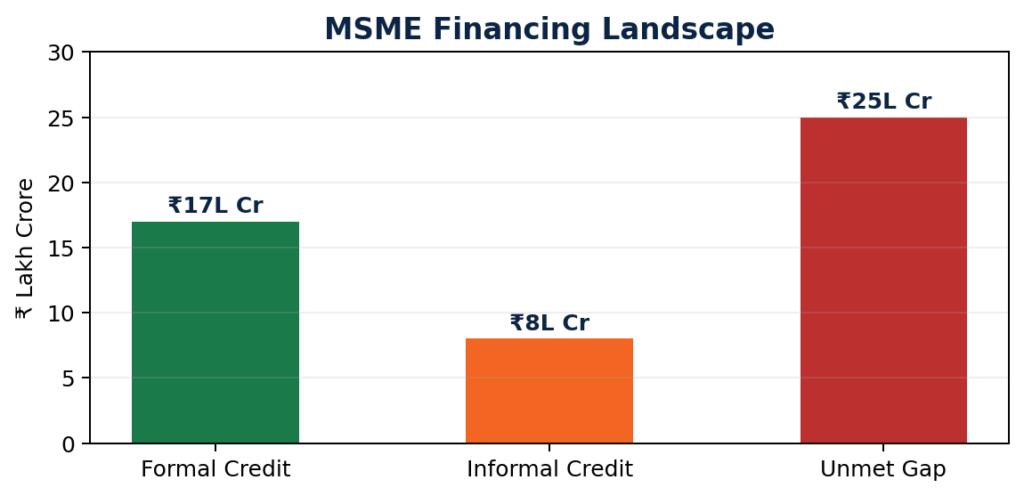
India’s 63 million small businesses generate ₹20–25 lakh crore in unmet credit demand annually. Yet most businesses are solving the wrong problem.
| 79M+ MSMES IN INDIA |
31.1% GDP CONTRIBUTION |
45% SHARE OF EXPORTS |
350M JOBS CREATED |
The Core Problem- The One Question Holding MSMEs Back.
Whether expanding operations, managing working capital, scaling production, or entering new markets, nearly every MSME growth conversation begins and ends with “How do we get funding?”
Access to capital matters. But sustainable growth depends on far more. What truly drives long-term stability is financial planning, cash flow management, capital allocation, and disciplined financial decision-making.
“Funding may support business growth — but financial planning sustains it.”
Market Reality- India’s ₹30+ Lakh Crore Credit Gap
According to RBI and industry reports, India’s MSME credit deficit is staggering. But the more pressing and overlooked issue is that businesses often secure funding without a structured financial roadmap. Capital without planning creates pressure, not progress.
Source: Strengthening Credit Flows to the MSME Sector
₹30+L Cr Estimated MSME credit gap in India per RBI & Industry Reports. Capital is available, but most MSMEs lack the financial framework to deploy it effectively.
SOURCE: RESERVE BANK OF INDIA · SIDBI MSME PULSE REPORT · INDUSTRY ESTIMATES
The hidden problem no one talks about
Many businesses successfully secure funding yet still struggle operationally. Capital without a financial plan creates repayment pressure and cash flow instability rather than growth.
Source: RBI reports
Revenue ≠ Healthy Cash Flow
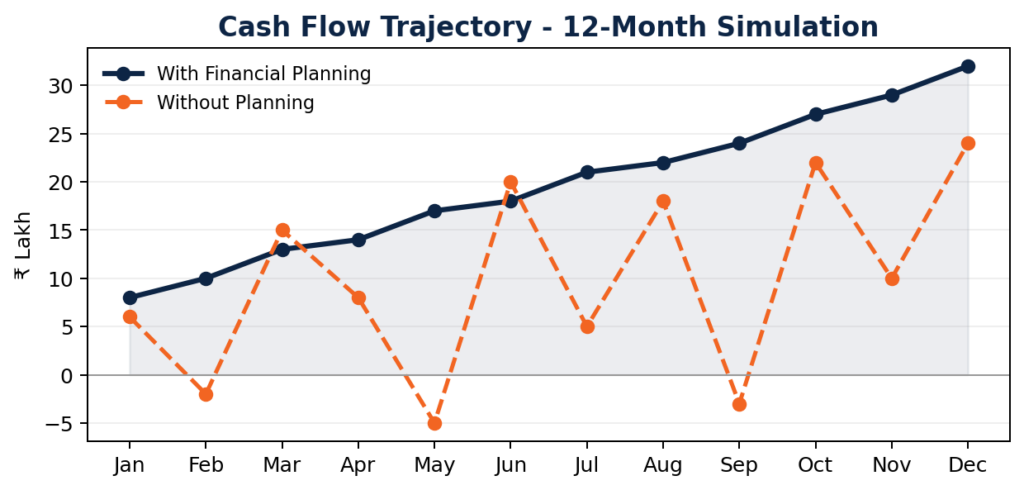
One of the biggest misconceptions among growing businesses is that increasing revenue automatically means financial stability. A company generating ₹1 crore monthly turnover but receiving payments after 90 days can still face severe working capital stress despite appearing profitable on paper.
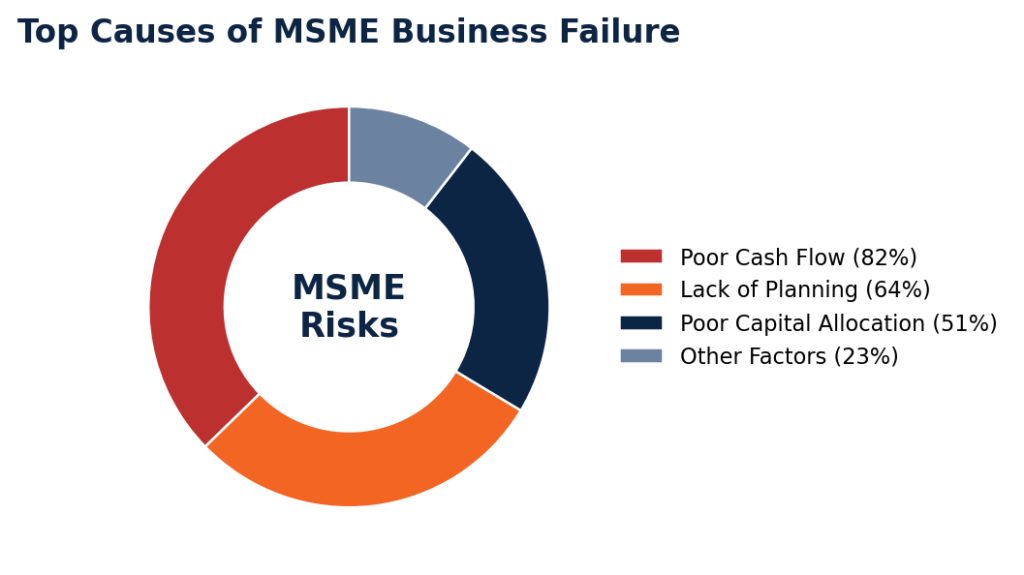
| 82% Small business failures linked to poor cash flow management |
90 Days- average B2B payment delay in India |
45–60 Days- the healthy working capital cycle benchmark |
“A business can be both profitable and broken — at the same time. Profitability without liquidity still creates financial instability.”
CASH FLOW MANAGEMENT PRINCIPLES · GLOBAL BUSINESS RESEARCH
Source: Vanguard Research – April 2025
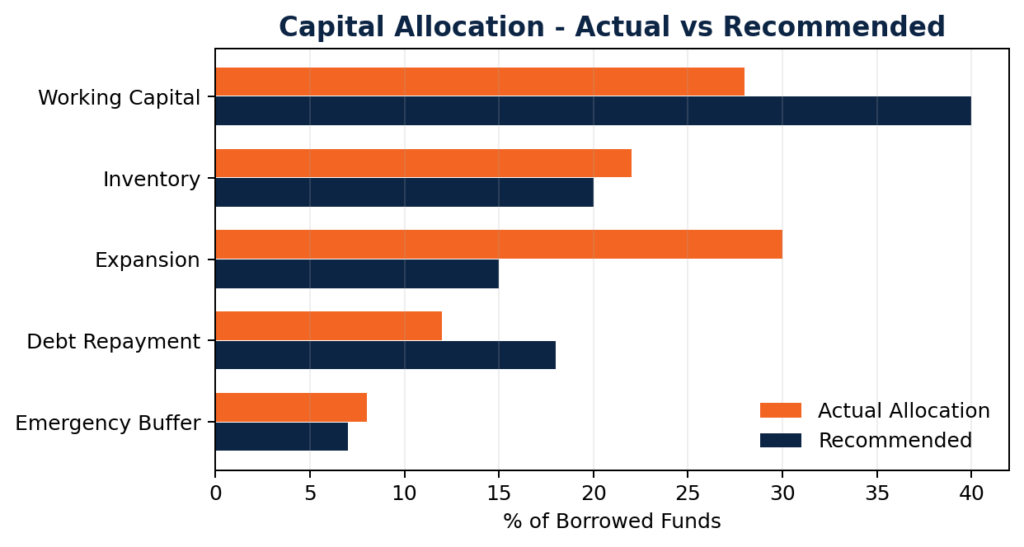
Capital Strategy: Capital Allocation Matters More Than Capital Access
Many MSMEs focus heavily on acquiring funds but spend very little time planning how those funds should actually be used, leading to over-borrowing, inefficient spending, and expansion without financial preparedness.
The most common and costly financial mistake
Using short-term working capital loans for long-term expansion. This creates repayment mismatches, cash flow disruption, and a compounding interest burden.
Source: Vanguard Research – April 2025
| Improve operational efficiency Right-size working capital for your cycle, not your ambition |
Maintain healthier liquidity A 3–6 month emergency buffer protects against market shocks |
| Reduce unnecessary liabilities Don’t borrow more than your cash cycle can comfortably service |
Plan expansion sustainably Use long-term instruments for long-term goals — always |
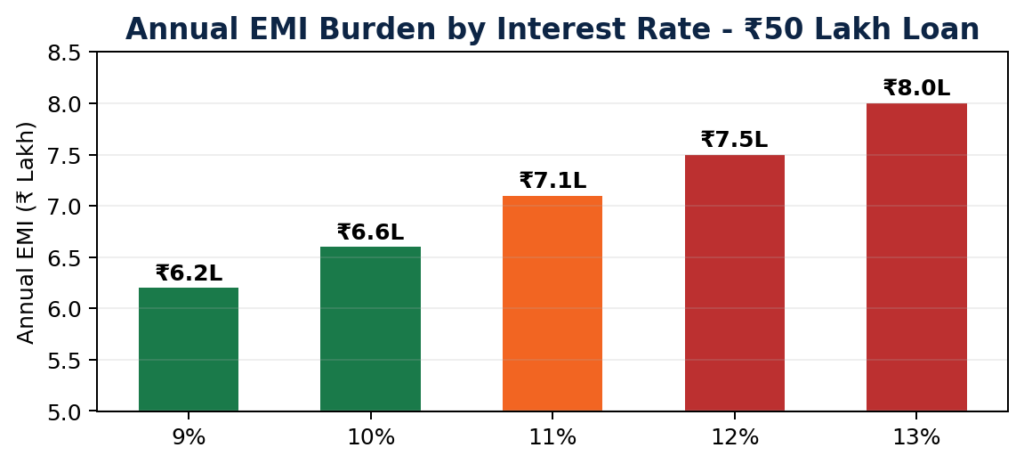
Rising Rates Are Raising the Stakes
Even a 1–2% increase in interest rates significantly impacts EMI obligations, working capital costs, and profit margins especially for MSMEs operating with tight cash cycles and thin margins.
Source: AngleOne—March 2026
5 Indicators That Separate Stable MSMEs from Vulnerable Ones
Businesses with structured financial processes respond better to uncertainty, scale more sustainably, maintain stronger banking relationships, and make faster strategic decisions. Financial clarity is a genuine competitive advantage.
| FINANCIAL AREA | HEALTHY BENCHMARK | AT-RISK SIGNAL | PRIORITY |
| Working Capital Cycle | 45–60 Days | >90 Days | Critical |
| Emergency Liquidity Buffer | 3–6 Months Reserves | <1 Month | Critical |
| Debt-to-Income Balance | DTI <40%, Sustainable | DTI >50% | Monitor |
| Cash Flow Forecasting | Monthly Structured Review | None / Reactive | Essential |
| Receivable Management | Structured Tracking System | Informal / None | Monitor |
BiggPocket Approach
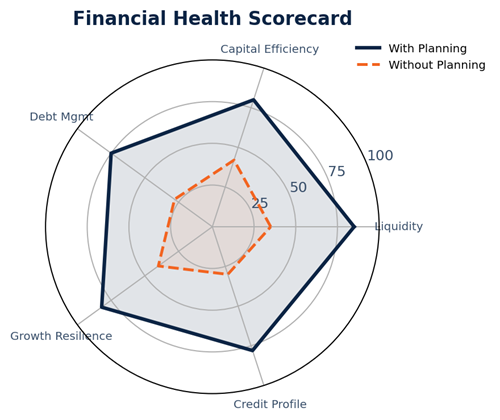
Advisory-Led Finance, A New Standard for MSMEs
Modern MSMEs no longer need just lenders. They need financial partners who understand business realities, industry pressures, and long-term goals. Smarter decisions are made with clarity, planning, and informed guidance not in isolation.
- Choose the right funding products
Match loan type to purpose- working capital, term loan, or overdraft. Mismatches are the leading cause of repayment strain.
- Structure repayment intelligently
Align EMI cycles to your receivable patterns not the lender’s calendar. Cash flow timing is everything.
- Improve financial documentation
GST-registered MSMEs with clean financials secure significantly better loan terms. Better books mean better access.
- Plan expansion sustainably
Expansion financed with long-term instruments reduces operational disruption during scale-up phases.
CONCLUSION
Long-Term Success Is Built on Financial Clarity
Funding helps businesses move forward. Financial planning determines whether that growth remains stable, profitable, and sustainable. For MSMEs aiming to scale confidently, the focus must go beyond accessing capital to managing it effectively, allocating it strategically, and building long-term financial resilience.
“Long-term business success is not built on funding alone. It is built on financial clarity, financial discipline, and smarter planning.”
At BiggPocket, businesses deserve more than financial products
We provide structured financial guidance supporting confident, informed, and sustainable growth. India’s 1st Integrated B2B Platform for Financial Advisors because your ambition deserves a roadmap, not just a loan.